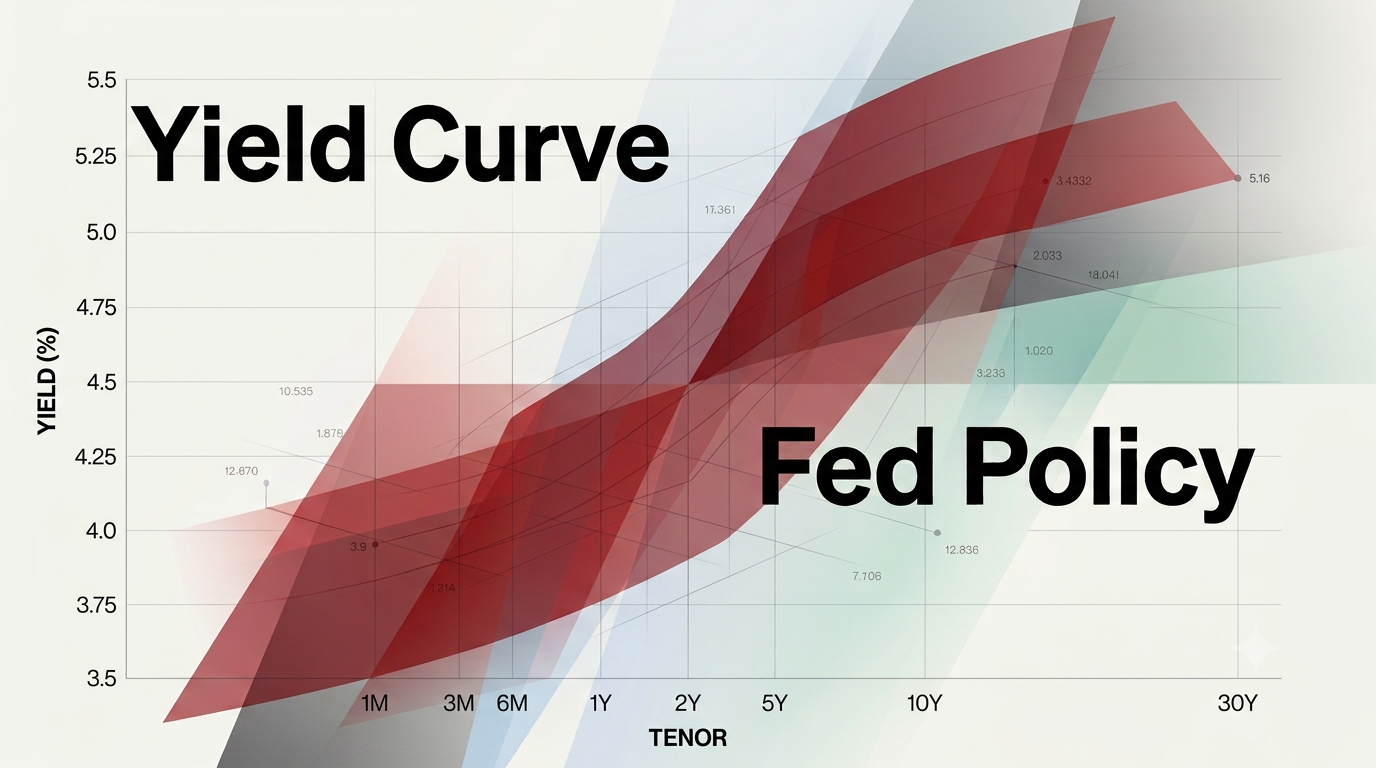
Line chart. September 25, 2026. Data table with 2 rows and 9 columns follows.
| 3-mo | 6-mo | 1-yr | 2-yr | 5-yr | 10-yr | 30-yr | AaaAaa represents the highest rung of investment-grade corporate debt, indicating top-level creditworthiness and the lowest default risk. More | BaaBaa represent the lowest rung of investment-grade corporate debt with moderate credit risk, making them susceptible to higher default risk than Aaa bonds. More |
|---|---|---|---|---|---|---|---|---|
| 4.24 | 4.33 | 4.5 | 4.81 | 4.98 | 5.17 | 5.49 | 6.18 | 6.63 |
| Date | 3-mth | 6-mth | 1-yr | 2-yr | 5-yr | 10-yr | 30-yr | AaaAaa represents the highest rung of investment-grade corporate debt, indicating top-level creditworthiness and the lowest default risk. More | BaaBaa represent the lowest rung of investment-grade corporate debt with moderate credit risk, making them susceptible to higher default risk than Aaa bonds. More | HY-OAS | 5Y5Y5Y5Y forward rate provides a market-implied view of where policy ultimately settles once cyclical forces dissipate. Importantly, it captures the destination of policy rather than its near-term trajectory, and should be interpreted as a structural anchor rather than a tactical signal. More Forward | 5Y Breakeven Inflation | MOVE Index | |
|---|---|---|---|---|---|---|---|---|---|---|---|---|---|---|
| 9/25/2026 | 4.24 | 4.33 | 4.50 | 4.81 | 4.98 | 5.17 | 5.49 | 6.18 | 6.63 | 2.93 | 2.34 | 2.34 | 96.00 | |
| 9/18/2026 | 4.14 | 4.24 | 4.44 | 4.76 | 4.86 | 5.01 | 5.34 | 5.98 | 6.41 | 2.68 | 2.35 | 2.31 | 80.64 | |
| 9/11/2026 | 4.07 | 4.12 | 4.35 | 4.63 | 4.78 | 4.96 | 5.35 | 6.03 | 6.46 | 2.65 | 2.32 | 2.4 | 82.21 | |
| 9/4/2026 | 3.91 | 3.98 | 4.13 | 4.37 | 4.54 | 4.78 | 5.24 | 5.92 | 6.34 | 2.68 | 2.33 | 2.37 | 73.1 | |
| 8/28/2026 | 3.90 | 4.02 | 4.15 | 4.34 | 4.48 | 4.73 | 5.22 | 5.86 | 6.27 | 2.60 | 2.32 | 2.3 | 70.97 | |
| 8/21/2026 | 3.88 | 3.95 | 4.03 | 4.24 | 4.43 | 4.74 | 5.27 | 5.92 | 6.37 | 2.70 | 2.34 | 2.34 | 73.4 | |
| 8/14/2026 | 3.86 | 3.95 | 3.98 | 4.17 | 4.36 | 4.68 | 5.25 | 5.92 | 6.37 | 2.67 | 2.3 | 2.24 | 69.58 | |
| 8/7/2026 | 3.87 | 3.96 | 4.01 | 4.19 | 4.35 | 4.65 | 5.19 | 5.85 | 6.29 | 2.7 | 2.28 | 2.22 | 72.03 | |
| 7/31/2026 | 3.83 | 3.98 | 4.08 | 4.28 | 4.45 | 4.75 | 5.27 | 5.96 | 6.38 | 2.84 | 2.3 | 2.26 | 83.02 | |
| 7/24/2026 | 3.96 | 4.08 | 4.14 | 4.33 | 4.43 | 4.69 | 5.16 | 5.87 | 6.28 | 2.79 | 2.28 | 2.24 | 76.82 | |
| 7/17/2026 | 3.85 | 3.96 | 4.01 | 4.18 | 4.28 | 4.55 | 5.06 | 5.72 | 6.14 | 2.73 | 2.21 | 2.27 | 70.88 | |
| 7/10/2026 | 3.85 | 3.99 | 4.06 | 4.21 | 4.30 | 4.56 | 5.06 | 5.72 | 6.14 | 2.69 | 2.2 | 2.28 | 69.55 | |
| 7/3/2026 | 3.82 | 3.98 | 3.96 | 4.14 | 4.23 | 4.49 | 4.98 | 5.6 | 6.02 | 2.74 | 2.22 | 2.24 | 65.4 | |
| 6/26/2026 | 3.83 | 3.94 | 3.94 | 4.07 | 4.12 | 4.38 | 4.87 | 5.5 | 5.94 | 2.83 | 2.19 | 2.21 | 66.79 | |
| 6/19/2026 | 3.83 | 3.92 | 4.00 | 4.19 | 4.23 | 4.46 | 4.90 | 5.5 | 5.97 | 2.66 | 2.23 | 2.27 | 65.39 | |
| 6/12/2026 | 3.78 | 3.82 | 3.86 | 4.09 | 4.21 | 4.48 | 4.97 | 5.52 | 6.01 | 2.71 | 2.23 | 2.39 | 69.36 | |
| 6/5/2026 | 3.78 | 3.81 | 3.88 | 4.17 | 4.29 | 4.55 | 5.01 | 5.53 | 6.06 | 2.76 | 2.24 | 2.48 | 75.2 | |
| 5/29/2026 | 3.69 | 3.78 | 3.79 | 3.98 | 4.13 | 4.45 | 4.99 | 5.5 | 6.02 | 2.72 | 2.24 | 2.52 | 70.22 | |
| 5/22/2026 | 3.68 | 3.79 | 3.86 | 4.13 | 4.27 | 4.56 | 5.07 | 5.61 | 6.13 | 2.74 | 2.26 | 2.54 | 78.43 | |
| 5/15/2026 | 3.69 | 3.77 | 3.82 | 4.09 | 4.26 | 4.59 | 5.12 | 5.65 | 6.21 | 2.80 | 2.28 | 2.7 | 79.87 | |
| 5/8/2026 | 3.69 | 3.74 | 3.75 | 3.90 | 4.02 | 4.38 | 4.95 | 5.47 | 6.03 | 2.81 | 2.28 | 2.62 | 67.25 | |
| 5/1/2026 | 3.68 | 3.71 | 3.73 | 3.88 | 4.02 | 4.39 | 4.97 | 5.49 | 6.08 | 2.77 | 2.27 | 2.69 | 70.41 | |
| 4/24/2026 | 3.69 | 3.71 | 3.67 | 3.78 | 3.92 | 4.31 | 4.91 | 5.41 | 6.01 | 2.86 | 2.23 | 2.61 | 66.97 | |
| 4/17/2026 | 3.70 | 3.69 | 3.64 | 3.71 | 3.84 | 4.26 | 4.88 | 5.36 | 5.98 | 2.83 | 2.16 | 2.56 | 65.7 | |
| 4/10/2026 | 3.69 | 3.72 | 3.70 | 3.81 | 3.94 | 4.31 | 4.91 | 5.42 | 6.03 | 2.94 | 2.14 | 2.58 | 72.15 | |
| 4/3/2026 | 3.71 | 3.73 | 3.72 | 3.84 | 3.99 | 4.35 | 4.91 | 5.44 | 6.05 | 3.13 | 2.11 | 2.61 | 81.78 | |
| 3/27/2026 | 3.73 | 3.75 | 3.77 | 3.88 | 4.06 | 4.44 | 4.98 | 5.66 | 6.22 | 3.42 | 2.06 | 2.56 | 111.95 | |
| 3/20/2026 | 3.74 | 3.79 | 3.80 | 3.88 | 4.01 | 4.39 | 4.96 | 5.61 | 6.18 | 3.24 | 2.13 | 2.63 | 108.84 | |
| 3/13/2026 | 3.72 | 3.70 | 3.66 | 3.73 | 3.87 | 4.28 | 4.90 | 5.60 | 6.11 | 3.28 | 2.11 | 2.61 | 91.17 | |
| 3/6/2026 | 3.71 | 3.68 | 3.56 | 3.53 | 3.67 | 4.10 | 4.73 | 5.32 | 5.86 | 3.13 | 2.14 | 2.56 | 81.26 | |
| 2/27/2026 | 3.68 | 3.61 | 3.48 | 3.42 | 3.58 | 4.02 | 4.64 | 5.25 | 5.77 | 3.10 | 2.1 | 2.40 | 73.38 | |
| 2/20/2026 | 3.69 | 3.60 | 3.51 | 3.46 | 3.65 | 4.08 | 4.72 | 5.25 | 5.76 | 2.86 | 2.13 | 2.43 | 64.27 | |
| 2/13/2026 | 3.68 | 3.59 | 3.42 | 3.40 | 3.61 | 4.04 | 4.69 | 5.31 | 5.81 | 2.95 | 2.12 | 2.42 | 70.1 | |
| 2/6/2026 | 3.68 | 3.59 | 3.45 | 3.54 | 3.80 | 4.26 | 4.85 | 5.40 | 5.90 | 2.87 | 2.18 | 2.50 | 63.62 | |
| 1/30/2026 | 3.67 | 3.61 | 3.48 | 3.54 | 3.81 | 4.24 | 4.87 | 5.35 | 5.86 | 2.80 | 2.19 | 2.53 | 59.2 |
Source: Federal Reserve Economic Data (FRED) is an online database created and maintained by the Research Department at the Federal Reserve Bank of St. Louis
LONG END REPRICING | CURVE STEEPENS | 10Y MOVES FURTHER ABOVE 5%
Treasury yields rose across the curve this week, but the composition of the move changed materially from the prior two weeks. The 3-month through 2-year sector increased between 5bp and 10bp, while the 5-year, 10-year and 30-year yields rose 12bp, 16bp and 15bp, respectively. The 10-year reached 5.17%, while the 30-year climbed to 5.49%. The resulting curve geometry shifted away from the recent bear-flatteningA bear flattener is a yield curve shift where short-term interest rates rise faster than long-term rates and often signals potential economic contraction or slower growth ahead. More pattern: the 10Y–3M spread widened 6bp and the 30Y–2Y spread widened 10bp, indicating renewed steepening as long-durationBond Duration: Estimates the percentage change in a bond’s price for every 1% shift in interest rates. For example, a bond with a 3-year duration will gain or lose roughly ±3% of its value if rates fall or rise by 1%. More yields began moving higher alongside the intermediate sector.
The move occurred alongside a significant deterioration in broader market conditions. HY OAS widened 25bp to 293bp, investment-grade yields rose more than 20bp, and MOVE jumped 15.36 points to 96. Inflation signals were mixed, with the 5Y5Y5Y5Y forward rate provides a market-implied view of where policy ultimately settles once cyclical forces dissipate. Importantly, it captures the destination of policy rather than its near-term trajectory, and should be interpreted as a structural anchor rather than a tactical signal. More Forward declining 1bp while the 5-year breakeven increased 3bp to 2.34%. Fed Funds Futures also became more hawkish at several medium-term meetings, particularly December and January.
Taken together, the week’s data suggest that the Treasury market is no longer repricing only the expected policy path; longer-duration risk is now demanding materially more compensation as well. That distinction matters. The prior week’s 30Y–2Y compression reflected a market willing to accept higher policy rates without proportionally repricing the long end. This week, that insulation weakened substantially.
Macro Structure: Broad Bearish Repricing with Renewed Long-End Pressure
-
-
-
- Front end:
- 3M → 4.24% (↑ +10bp)
- 6M → 4.33% (↑ +9bp)
- 1Y → 4.50% (↑ +6bp)
- Front end:
-
-
→ The front end continued to move higher, although the magnitude of the increase moderated considerably relative to the previous two weeks.
The 3-month and 6-month maturities increased 10bp and 9bp, while the 1-year rose 6bp. This indicates that policy-sensitive yields remain elevated, but the market is no longer repricing the immediate policy horizon as aggressively as it did following the September FOMC.
The 1-year yield at 4.50% remains well above the level prevailing earlier in September, reinforcing that the market continues to expect a restrictive policy environment even as the precise timing of subsequent moves remains uncertain.
-
-
-
- Belly:
- 2Y → 4.81% (↑ +5bp)
- 5Y → 4.98% (↑ +12bp)
- Belly:
-
-
→ The belly produced a more differentiated move. The 2-year rose only 5bp, while the 5-year increased 12bp.
This is important because it suggests that the latest selloff is no longer simply about the very near-term policy rate. The 5-year’s larger increase points toward repricing of the broader medium-term rate structure.
The 5-year is now only 2bp below 5%, while the 2-year remains below the 5-year by 17bp. The market is therefore demanding considerably more yield across intermediate-duration exposure.
-
-
-
- Long end:
- 10Y → 5.17% (↑ +16bp)
- 30Y → 5.49% (↑ +15bp)
- Long end:
-
-
→ The long end was the most important development of the week.
The 10-year rose 16bp and the 30-year 15bp, bringing both maturities substantially higher despite Treasury’s expanded long-end liquidity-support buyback program.
This is materially different from last week’s configuration, when the 30-year actually declined 1bp while the 2-year surged 13bp.
The current move suggests that long-durationBond Duration: Estimates the percentage change in a bond’s price for every 1% shift in interest rates. For example, a bond with a 3-year duration will gain or lose roughly ±3% of its value if rates fall or rise by 1%. More yields are increasingly being driven by forces beyond the expected Fed policy path — including term premiumThe "extra" return investors demand for holding a long-term bond instead of a series of short-term ones. It acts as a safety buffer, compensating the lender for the increased risk that inflation or interest rates might change unexpectedly over a longer period. More, Treasury financing requirements, inflation risk and broader demand for durationBond Duration: Estimates the percentage change in a bond’s price for every 1% shift in interest rates. For example, a bond with a 3-year duration will gain or lose roughly ±3% of its value if rates fall or rise by 1%. More.
Treasury’s buybacks may improve liquidity in targeted off-the-run sectors, but they are not equivalent to monetary easing or large-scale durationBond Duration: Estimates the percentage change in a bond’s price for every 1% shift in interest rates. For example, a bond with a 3-year duration will gain or lose roughly ±3% of its value if rates fall or rise by 1%. More absorption. Treasury announced that longer-dated liquidity-support buybacks would be at least doubled to $4 billion per operation, and a September 10 operation subsequently allowed purchases of up to $6 billion in the 10Y–20Y sector.
Curve & Inflation Signals
The curve shifted decisively toward bear steepeningA bear steepener occurs when long-term rates rise faster than short-term rates and is generally associated with rising inflationary expectations. More.
-
-
-
- 10Y–3M spread: +93bp (↑ +6bp)
- 30Y–2Y spread: +68bp (↑ +10bp)
-
-
→ The two major curve measures now point in the same direction.
The 10Y–3M spread widened 6bp, as the 10-year increased 16bp compared with a 10bp increase in the 3-month.
More importantly, the 30Y–2Y spread widened 10bp, as the 30-year increased 15bp while the 2-year rose only 5bp.
This represents a meaningful reversal from the previous week’s 58bp 30Y–2Y spread.
The market is therefore no longer simply pricing a higher policy rate while holding the long end relatively stable. Long-durationBond Duration: Estimates the percentage change in a bond’s price for every 1% shift in interest rates. For example, a bond with a 3-year duration will gain or lose roughly ±3% of its value if rates fall or rise by 1%. More yields are now participating directly in the repricing.
-
-
-
- 5Y5Y5Y5Y forward rate provides a market-implied view of where policy ultimately settles once cyclical forces dissipate. Importantly, it captures the destination of policy rather than its near-term trajectory, and should be interpreted as a structural anchor rather than a tactical signal. More Forward: 2.34% (↓ -1bp)
- 5Y Breakeven Inflation: 2.34% (↑ +3bp)
-
-
→ Inflation signals remain mixed.
The 5-year breakeven increased 3bp, suggesting somewhat greater near- to medium-term inflation compensation. However, the 5Y5Y5Y5Y forward rate provides a market-implied view of where policy ultimately settles once cyclical forces dissipate. Importantly, it captures the destination of policy rather than its near-term trajectory, and should be interpreted as a structural anchor rather than a tactical signal. More Forward declined 1bp, indicating that longer-run inflation expectations have not moved materially higher.
The week’s long-end selloff therefore cannot be attributed solely to a renewed inflation shock. The more plausible interpretation is a combination of higher durationBond Duration: Estimates the percentage change in a bond’s price for every 1% shift in interest rates. For example, a bond with a 3-year duration will gain or lose roughly ±3% of its value if rates fall or rise by 1%. More compensation, Treasury supply/financing considerations, and a market reassessment of the longer-run rate structure, with inflation compensation providing an additional but not dominant pressure.
Fed Policy Expectations
Fed Funds Futures became more restrictive at several medium-term meetings, although the individual-meeting distributions remain uneven.
-
-
-
- October: No change increased from 45.74% to 52.30%, while +25bp declined from 39.74% to 33.09%. A −25bp cut remains around 15%.
→ The October meeting is now more heavily weighted toward no change. The market is therefore not simply extrapolating the September hike into an immediate October follow-through. - December: +50bp increased from 60.38% to 74.03%, while +25bp declined from 39.62% to 25.97%.
- January 2027: +50bp increased from 34.15% to 64.15%, while +25bp declined from 51.22% to 35.85% and no change fell to zero.
- March 2027: +50bp remains dominant at 85.37%, although this is modestly below the prior 93.62%.
- April 2027: +50bp increased from 85.39% to 100%.
- June 2027: +50bp remains at 100%.
- October: No change increased from 45.74% to 52.30%, while +25bp declined from 39.74% to 33.09%. A −25bp cut remains around 15%.
-
-
→ The Fed futures curve remains structurally hawkish, but not uniformly so across individual meetings.
The key development is the shift toward a higher cumulative policy rate by December and January. At the same time, October pricing has become less aggressive.
This reinforces an important distinction: the market is repricing the expected level of policy over the medium term rather than simply assigning higher probabilities to consecutive meetings.
Credit Markets
Credit conditions deteriorated meaningfully this week.
-
-
-
- AaaAaa represents the highest rung of investment-grade corporate debt, indicating top-level creditworthiness and the lowest default risk. More: 6.18% (↑ +20bp)
- BaaBaa represent the lowest rung of investment-grade corporate debt with moderate credit risk, making them susceptible to higher default risk than Aaa bonds. More: 6.63% (↑ +22bp)
- Baa–AaaAaa represents the highest rung of investment-grade corporate debt, indicating top-level creditworthiness and the lowest default risk. More spread: +45bp (↑ +2bp)
- HY OAS: 2.93% (↑ +25bp)
-
-
→ Credit provided a substantially less constructive signal than in the prior two weeks.
The 20–22bp increase in investment-grade yields reflects both the Treasury selloff and a modest increase in credit compensation, while the 25bp widening in HY OAS is more significant.
This is no longer simply a Treasury-rate story. The widening in high-yield spreads indicates that investors are beginning to demand more compensation for corporate credit risk as the rate environment becomes more restrictive.
Credit is still not signaling systemic stress, but the direction has clearly become less supportive.
MOVE Index
The ICE Bank of America U.S. Bond Market Option Volatility Estimate (MOVE) Index measures implied volatility of U.S. Treasury yields, derived from options on Treasuries (primarily 2Y–30Y maturities). It’s commonly called the “VIX for bonds”, but more precisely, it reflects the market’s expectation of how much Treasury yields will move, not bond prices. It is a critical cross-asset signal.
The ICE BofA U.S. Bond Market Option Volatility Estimate (MOVE) Index is the primary gauge of expected volatility in the U.S. Treasury market. Often called the "VIX for bonds," it measures market sentiment and interest rate risk by tracking the implied volatility of U.S. Treasury options.
| Date | bp |
|---|---|
| 1/3/2020 | 60.12 |
| 1/10/2020 | 60.12 |
| 1/17/2020 | 53.32 |
| 1/24/2020 | 49.67 |
| 1/31/2020 | 59.94 |
| 2/7/2020 | 72.98 |
| 2/14/2020 | 65.59 |
| 2/21/2020 | 62.38 |
| 2/28/2020 | 74.54 |
| 3/6/2020 | 109.67 |
| 3/13/2020 | 125.21 |
| 3/20/2020 | 138.4 |
| 3/27/2020 | 133.37 |
| 4/3/2020 | 88.33 |
| 4/10/2020 | 65.01 |
| 4/17/2020 | 74.39 |
| 4/24/2020 | 69.84 |
| 5/1/2020 | 66.09 |
| 5/8/2020 | 48.11 |
| 5/15/2020 | 57.4 |
| 5/22/2020 | 56.53 |
| 5/29/2020 | 51.67 |
| 6/5/2020 | 51.55 |
| 6/12/2020 | 61.97 |
| 6/19/2020 | 55.81 |
| 6/26/2020 | 53.45 |
| 7/3/2020 | 51.21 |
| 7/10/2020 | 50.96 |
| 7/17/2020 | 49.19 |
| 7/24/2020 | 45.68 |
| 7/31/2020 | 42.48 |
| 8/7/2020 | 41.98 |
| 8/14/2020 | 41.46 |
| 8/21/2020 | 43.09 |
| 8/28/2020 | 45.14 |
| 9/4/2020 | 48.19 |
| 9/11/2020 | 47.04 |
| 9/18/2020 | 43.12 |
| 9/25/2020 | 37.24 |
| 10/2/2020 | 36.97 |
| 10/9/2020 | 39.97 |
| 10/16/2020 | 57.52 |
| 10/23/2020 | 57.25 |
| 10/30/2020 | 58.46 |
| 11/6/2020 | 61.91 |
| 11/13/2020 | 39.88 |
| 11/20/2020 | 42.95 |
| 11/27/2020 | 42.31 |
| 12/4/2020 | 39.64 |
| 12/11/2020 | 43.89 |
| 12/18/2020 | 47.52 |
| 12/25/2020 | 44.64 |
| 1/1/2021 | 42.11 |
| 1/8/2021 | 48.98 |
| 1/15/2021 | 44.81 |
| 1/22/2021 | 45.14 |
| 1/29/2021 | 43.09 |
| 2/5/2021 | 47.41 |
| 2/12/2021 | 47.2 |
| 2/19/2021 | 47.01 |
| 2/26/2021 | 60.43 |
| 3/5/2021 | 75.66 |
| 3/12/2021 | 69.37 |
| 3/19/2021 | 70.83 |
| 3/26/2021 | 68.8 |
| 4/2/2021 | 61.49 |
| 4/9/2021 | 63.71 |
| 4/16/2021 | 61.21 |
| 4/23/2021 | 62.57 |
| 4/30/2021 | 59.98 |
| 5/7/2021 | 58.13 |
| 5/14/2021 | 54.13 |
| 5/21/2021 | 54.99 |
| 5/28/2021 | 54.59 |
| 6/4/2021 | 52.04 |
| 6/11/2021 | 49.78 |
| 6/18/2021 | 50.85 |
| 6/25/2021 | 60.45 |
| 7/2/2021 | 55.58 |
| 7/9/2021 | 52.41 |
| 7/16/2021 | 59.92 |
| 7/23/2021 | 58.24 |
| 7/30/2021 | 65.28 |
| 8/6/2021 | 61.19 |
| 8/13/2021 | 62.64 |
| 8/20/2021 | 55.45 |
| 8/27/2021 | 59.95 |
| 9/3/2021 | 57.98 |
| 9/10/2021 | 53.26 |
| 9/17/2021 | 51.73 |
| 9/24/2021 | 56.06 |
| 10/1/2021 | 58.46 |
| 10/8/2021 | 57.38 |
| 10/15/2021 | 59.65 |
| 10/22/2021 | 62.7 |
| 10/29/2021 | 72.04 |
| 11/5/2021 | 75.45 |
| 11/12/2021 | 66.9 |
| 11/19/2021 | 78.61 |
| 11/26/2021 | 73.39 |
| 12/3/2021 | 89.45 |
| 12/10/2021 | 79.14 |
| 12/17/2021 | 74.36 |
| 12/24/2021 | 72.46 |
| 12/31/2021 | 77.29 |
| 1/7/2022 | 77.1 |
| 1/14/2022 | 74.69 |
| 1/21/2022 | 76.59 |
| 1/28/2022 | 81.03 |
| 2/4/2022 | 85.29 |
| 2/11/2022 | 87.68 |
| 2/18/2022 | 94.03 |
| 2/25/2022 | 94.36 |
| 3/4/2022 | 93.34 |
| 3/11/2022 | 131.82 |
| 3/18/2022 | 99.03 |
| 3/25/2022 | 91.77 |
| 4/1/2022 | 125.27 |
| 4/8/2022 | 108.34 |
| 4/15/2022 | 124.86 |
| 4/22/2022 | 119.66 |
| 4/29/2022 | 128.12 |
| 5/6/2022 | 128.4 |
| 5/13/2022 | 121.42 |
| 5/20/2022 | 114.61 |
| 5/27/2022 | 111.1 |
| 6/3/2022 | 98.48 |
| 6/10/2022 | 97.73 |
| 6/17/2022 | 114.23 |
| 6/24/2022 | 133.75 |
| 7/1/2022 | 127 |
| 7/8/2022 | 144.17 |
| 7/15/2022 | 145.25 |
| 7/22/2022 | 129.85 |
| 7/29/2022 | 123.7 |
| 8/5/2022 | 116.36 |
| 8/12/2022 | 122.58 |
| 8/19/2022 | 106.28 |
| 8/26/2022 | 123.81 |
| 9/2/2022 | 122.95 |
| 9/9/2022 | 120.72 |
| 9/16/2022 | 121.54 |
| 9/23/2022 | 124.95 |
| 9/30/2022 | 137.28 |
| 10/7/2022 | 141.89 |
| 10/14/2022 | 148.46 |
| 10/21/2022 | 152.89 |
| 10/28/2022 | 156.95 |
| 11/4/2022 | 144.6 |
| 11/11/2022 | 128.44 |
| 11/18/2022 | 111.69 |
| 11/25/2022 | 129.33 |
| 12/2/2022 | 129.6 |
| 12/9/2022 | 118.62 |
| 12/16/2022 | 132.79 |
| 12/23/2022 | 113.65 |
| 12/30/2022 | 113.17 |
| 1/6/2023 | 121.61 |
| 1/13/2023 | 113.87 |
| 1/20/2023 | 113.55 |
| 1/27/2023 | 114.76 |
| 2/3/2023 | 100.7 |
| 2/10/2023 | 98.99 |
| 2/17/2023 | 109.63 |
| 2/24/2023 | 110.11 |
| 3/3/2023 | 122.84 |
| 3/10/2023 | 122.52 |
| 3/17/2023 | 140.06 |
| 3/24/2023 | 180.11 |
| 3/31/2023 | 173.66 |
| 4/7/2023 | 135.93 |
| 4/14/2023 | 139.2 |
| 4/21/2023 | 118.84 |
| 4/28/2023 | 120.84 |
| 5/5/2023 | 122.46 |
| 5/12/2023 | 130.21 |
| 5/19/2023 | 120.52 |
| 5/26/2023 | 127.51 |
| 6/2/2023 | 145.37 |
| 6/9/2023 | 120.95 |
| 6/16/2023 | 115.77 |
| 6/23/2023 | 104.43 |
| 6/30/2023 | 105.74 |
| 7/7/2023 | 110.64 |
| 7/14/2023 | 130.41 |
| 7/21/2023 | 112.48 |
| 7/28/2023 | 106.66 |
| 8/4/2023 | 109.76 |
| 8/11/2023 | 115.91 |
| 8/18/2023 | 112.13 |
| 8/25/2023 | 120.51 |
| 9/1/2023 | 110.37 |
| 9/8/2023 | 102.92 |
| 9/15/2023 | 104.34 |
| 9/22/2023 | 96.61 |
| 9/29/2023 | 101.11 |
| 10/6/2023 | 113.55 |
| 10/13/2023 | 126.64 |
| 10/20/2023 | 128.33 |
| 10/27/2023 | 135.45 |
| 11/3/2023 | 129.16 |
| 11/10/2023 | 118.74 |
| 11/17/2023 | 116.79 |
| 11/24/2023 | 113.11 |
| 12/1/2023 | 107.43 |
| 12/8/2023 | 111.51 |
| 12/15/2023 | 121.65 |
| 12/22/2023 | 115.75 |
| 12/29/2023 | 111.38 |
| 1/5/2024 | 114.62 |
| 1/12/2024 | 116.19 |
| 1/19/2024 | 106.51 |
| 1/26/2024 | 104.97 |
| 2/2/2024 | 100.23 |
| 2/9/2024 | 106.72 |
| 2/16/2024 | 106.21 |
| 2/23/2024 | 109.2 |
| 3/1/2024 | 108.31 |
| 3/8/2024 | 106.48 |
| 3/15/2024 | 100.88 |
| 3/22/2024 | 97.82 |
| 3/29/2024 | 91.04 |
| 4/5/2024 | 86.38 |
| 4/12/2024 | 94.31 |
| 4/19/2024 | 112.82 |
| 4/26/2024 | 111.26 |
| 5/3/2024 | 104.4 |
| 5/10/2024 | 95.96 |
| 5/17/2024 | 94.23 |
| 5/24/2024 | 89.35 |
| 5/31/2024 | 83.57 |
| 6/7/2024 | 91.14 |
| 6/14/2024 | 91.82 |
| 6/21/2024 | 100.16 |
| 6/28/2024 | 94.09 |
| 7/5/2024 | 98.59 |
| 7/12/2024 | 98.78 |
| 7/19/2024 | 86.79 |
| 7/26/2024 | 94.29 |
| 8/2/2024 | 97.76 |
| 8/9/2024 | 112.26 |
| 8/16/2024 | 108.26 |
| 8/23/2024 | 102.81 |
| 8/30/2024 | 105.63 |
| 9/6/2024 | 107.77 |
| 9/13/2024 | 107.24 |
| 9/20/2024 | 100.6 |
| 9/27/2024 | 91 |
| 10/4/2024 | 92.53 |
| 10/11/2024 | 100.15 |
| 10/18/2024 | 118.47 |
| 10/25/2024 | 123.13 |
| 11/1/2024 | 128.4 |
| 11/8/2024 | 132.58 |
| 11/15/2024 | 99.85 |
| 11/22/2024 | 102.47 |
| 11/29/2024 | 99.14 |
| 12/6/2024 | 95.22 |
| 12/13/2024 | 83.2 |
| 12/20/2024 | 85.66 |
| 12/27/2024 | 91.75 |
| 1/3/2025 | 94.8 |
| 1/10/2025 | 93.35 |
| 1/17/2025 | 96.57 |
| 1/24/2025 | 95.6 |
| 1/31/2025 | 86.75 |
| 2/7/2025 | 91.76 |
| 2/14/2025 | 93.13 |
| 2/21/2025 | 84.67 |
| 2/28/2025 | 91.83 |
| 3/7/2025 | 104.46 |
| 3/14/2025 | 104.41 |
| 3/21/2025 | 101.01 |
| 3/28/2025 | 94.54 |
| 4/4/2025 | 96.83 |
| 4/11/2025 | 125.71 |
| 4/18/2025 | 137.26 |
| 4/25/2025 | 114.64 |
| 5/2/2025 | 105.79 |
| 5/9/2025 | 101.4 |
| 5/16/2025 | 100.4 |
| 5/23/2025 | 96.7 |
| 5/30/2025 | 100.91 |
| 6/6/2025 | 92.11 |
| 6/13/2025 | 89.65 |
| 6/20/2025 | 95.31 |
| 6/27/2025 | 90.1 |
| 7/4/2025 | 87.93 |
| 7/11/2025 | 86.09 |
| 7/18/2025 | 85.48 |
| 7/25/2025 | 83.29 |
| 8/1/2025 | 82.09 |
| 8/8/2025 | 83.83 |
| 8/15/2025 | 79.2 |
| 8/22/2025 | 76.66 |
| 8/29/2025 | 78.1 |
| 9/5/2025 | 79.39 |
| 9/12/2025 | 85.29 |
| 9/19/2025 | 73.37 |
| 9/26/2025 | 72.51 |
| 10/3/2025 | 74.38 |
| 10/10/2025 | 69.53 |
| 10/17/2025 | 81.65 |
| 10/24/2025 | 78.62 |
| 10/31/2025 | 68.94 |
| 11/7/2025 | 66.61 |
| 11/14/2025 | 74.41 |
| 11/21/2025 | 79.71 |
| 11/28/2025 | 78.81 |
| 12/5/2025 | 68.95 |
| 12/12/2025 | 67.28 |
| 12/19/2025 | 69.25 |
| 12/26/2025 | 59.41 |
| 1/2/2026 | 58.5 |
| 1/9/2026 | 62.36 |
| 1/16/2026 | 61.55 |
| 1/23/2026 | 58.05 |
| 1/30/2026 | 56.25 |
| 2/6/2026 | 59.2 |
| 2/13/2026 | 63.62 |
| 2/20/2026 | 70.1 |
| 2/27/2026 | 64.27 |
| 3/6/2026 | 73.38 |
| 3/13/2026 | 81.26 |
| 3/20/2026 | 91.17 |
| 3/27/2026 | 108.84 |
| 4/3/2026 | 111.95 |
| 4/10/2026 | 81.78 |
| 4/17/2026 | 72.15 |
| 4./24/2026 | 65.7 |
| 5/1/2026 | 66.97 |
| 5/8/2026 | 70.41 |
| 5/15/2026 | 67.25 |
| 5/22/2026 | 79.87 |
| 5/29/2026 | 78.43 |
| 6/5/2026 | 70.22 |
| 6/12/2026 | 75.2 |
| 6/19/2026 | 69.36 |
| 6/26/2026 | 65.39 |
| 7/3/2026 | 66.79 |
| 7/10/2026 | 65.4 |
| 7/17/2026 | 69.55 |
| 7/24/2026 | 70.88 |
| 7/31/2026 | 76.82 |
| 8/7/2026 | 83.02 |
| 8/14/2026 | 72.03 |
| 8/21/2026 | 69.58 |
| 8/28/2026 | 73.4 |
| 9/4/2026 | 70.97 |
| 9/11/2026 | 73.1 |
| 9/18/2026 | 82.21 |
| 9/25/2026 | 80.64 |
| 10/2/2026 | 96 |
-
-
-
- Current reading: 96(↑ +15.36)
- Leading Indicator: Rate volatility often transmits into equity volatility because discount ratesThe interest rate used to determine what a future sum of money is worth today. It accounts for the "time value of money"—the principle that a dollar today is worth more than a dollar tomorrow—and the risk that a future payment might not actually be received. More underpin asset valuations.
- Trend: MOVE increased sharply after already moving higher earlier in September.
- Interpretation: The 15.36-point increase is significant. Treasury volatility has now moved well beyond the relatively contained levels observed through August and early September.
→ The rate-market repricing is becoming materially less orderly. Investors are not simply accepting a new rate level; uncertainty around the interaction between Fed policy, Treasury financing, inflation and long-durationBond Duration: Estimates the percentage change in a bond’s price for every 1% shift in interest rates. For example, a bond with a 3-year duration will gain or lose roughly ±3% of its value if rates fall or rise by 1%. More demand has increased.
The combination of MOVE near 100, a 5.17% 10-year yield and a 25bp widening in HY OAS is considerably more consequential than the Treasury selloff viewed in isolation.
- Expected 10yr ranges (by timeframe):
-
-
| Timeframe | Low (%) | High (%) |
|---|---|---|
| 1 week | 5.04 | 5.30 |
| 1 month | 4.89 | 5.45 |
| 1 year | 4.21 | 6.13 |
Impact on Equities
-
-
-
- Equity Valuation Pressure: Equity valuation conditions have become substantially more challenging.
-
-
Normal Equity Risk Premium (ERP): the extra return investors expect for choosing stocks over “safe” Treasuries. While earnings yields provide a baseline for expected returns, the sustainability of those returns depends heavily on the composition of nominal growth.
The “quality” of the 2025 Nominal GDP was low, as the latest release of 2025 Real GDP (BEA) was only 0.48%, while inflation (GDP Price Deflator) was around 3.74%. This puts Nominal GDP (2025) at 4.24%. In other words, ~88.2% of the increase in the dollar value of the economy (Nominal GDP) in 2025 was due to higher prices. If this trend continues, then the threat of stagflationAn economic anomaly characterized by the simultaneous occurrence of stagnant growth and high unemployment alongside persistent, rising inflationary pressure. More rises. With real growth subdued and inflation doing most of the work, the quality of earnings expansion becomes a key risk for equity valuations.
-
-
-
-
Fixed income yields remain increasingly competitive relative to equity earnings yields
-
- 10Y Treasury: 5.17%
- 30Y Treasury: 5.49%
- Investment Grade Credit: 6.18% – 6.63%
-
-
-
-
→ The 10-year Treasury has moved 67bp above the 4.50% valuation threshold that represents an important line in the sand for equity discount ratesThe interest rate used to determine what a future sum of money is worth today. It accounts for the "time value of money"—the principle that a dollar today is worth more than a dollar tomorrow—and the risk that a future payment might not actually be received. More.
The significance is amplified by the fact that the long end itself is now moving higher. The previous week’s configuration allowed investors to argue that higher policy rates were largely an intermediate-duration issue. This week’s move weakens that argument.
The combination of higher long-term yields, wider credit spreadsIn the bond market, it is the difference in yield between a corporate bond and a "risk-free" government bond of the same maturity. It represents the extra interest investors demand to compensate for the risk that a company might default. More and sharply higher MOVE creates a more difficult environment for equity multiples.
→ Bottom line: Equity conditions are now materially more challenging. The 5.17% 10-year yield, 5.49% 30-year yield and 96 MOVE reading represent a meaningful tightening in the financial backdrop even without a recessionary signal.
Risk Appetite
Yield Curve Summary
| Metric | (bp) | Comment |
|---|---|---|
| 2yr - 3mo | +57 | Terminal rateThe ultimate peak or trough interest rate targeted by a central bank before halting a monetary policy cycle, marking the point where policy is deemed sufficiently restrictive to curb inflation or accommodative to spur growth. More might have been reached. |
| 10yr - 3mo | +93 | Long-term inflation persistence worries replacing recessionary risk worries. |
| 10yr - 2yr | +36 | Fairly robust signal of economic "normalization" |
| AaaAaa represents the highest rung of investment-grade corporate debt, indicating top-level creditworthiness and the lowest default risk. More - 10yr | +101 | healthy, standard spread for top-tier credit, indicating no signs of stress in the plumbing of the financial system. |
| HY-OAS | +293 | credit markets are not pricing in meaningful default risk or recession stress |
| MOVE Index | +96 | Rate volatility is picking up |
| 5Y5Y Forward Rate5Y5Y forward rate provides a market-implied view of where policy ultimately settles once cyclical forces dissipate. Importantly, it captures the destination of policy rather than its near-term trajectory, and should be interpreted as a structural anchor rather than a tactical signal. More | 2.34% | Fed policy remains restrictive relative to its longer-run equilibrium. |
| 5Y Breakeven Inflation Rate | 2.34% | Inflation expectations remain somewhat above target |